Zero
Operational water consumption


The world creates 2 billion tons of waste every year. We start there.
We work closely with local municipalities and waste companies to source landfill and incineration bound waste.
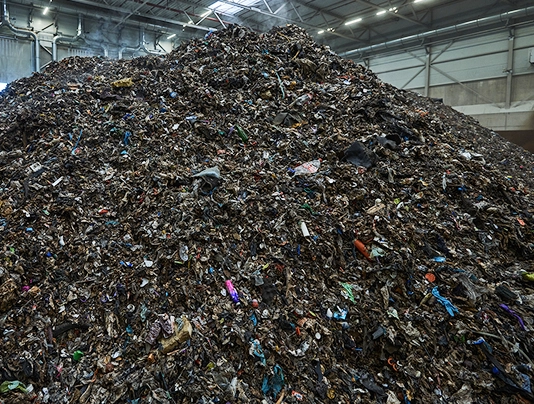
Mixed household waste, including, chicken bones, greasy pizza boxes, food scraps, garden trimmings, diapers, and even multilayered packaging like potato chip bags with aluminum lining.
In other words, every single item that will be sent to landfills or incinerators.
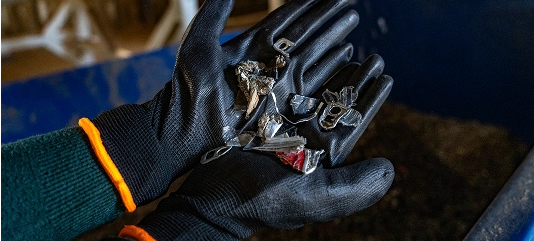
The remaining metals and minerals are sent to be properly recycled.
UBQ Evolved Materials™ patented process converts mixed household waste (including organics and hard-to-recycle materials) into a high quality thermoplastic composite. The result is a single, fully replicable material that performs consistently at commercial scale.
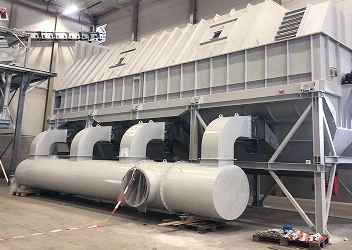
Mixed household waste comes in and is dried and screened to maximize sorting efficiencies.
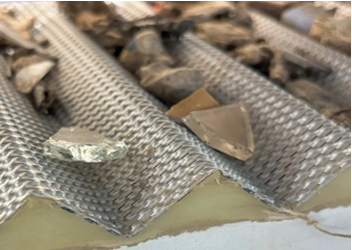
Waste is then sorted to remove metals and minerals which are then properly recycled.
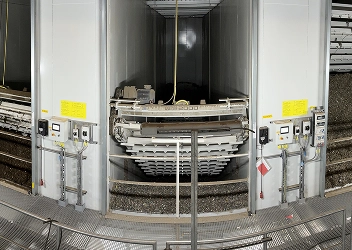
Our patented process breaks down the organics into their basic building blocks. This creates the natural stickiness, which is the matrix that binds all of the components together, even those that aren't chemically compatible.
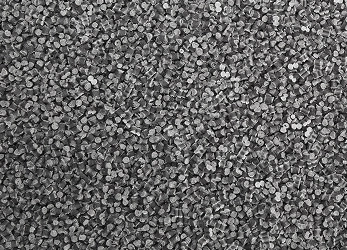
Which results in the creation of UBQ Evolved Materials™, the homogeneous, fully replicable composite material.
Delivering the strength, consistency, and processability manufacturers need.

Reduces carbon footprint and water consumption vs. conventional plastic materials.

Made entirely from mixed household waste that would otherwise be landfilled or incinerated.

Formulated to integrate into most conventional virgin and recycled polymer systems.

Composition is of a highly organic nature — the natural binding mechanism is what gives UBQ™ its unique properties.
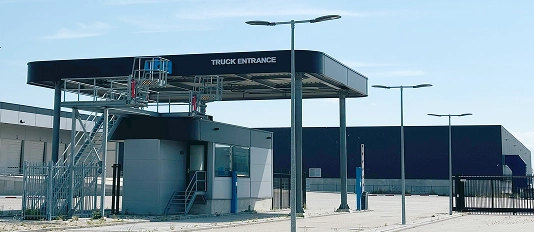
The 100% solar powered UBQ™ production facility sits at the heart of the West-Noord Brabant region in Bergen op Zoom, the Netherlands.
Operational water consumption
Emissions generated
Combustion required
The UBQ™ Fusion Process uses lower temperatures and requires less energy than oil-based plastic production.
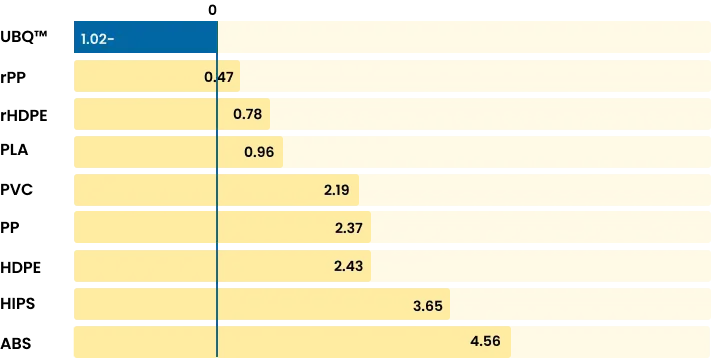
A verified third-party life cycle assessment (LCA) conducted by ERM confirms that UBQ™ is climate-positive, removing more carbon from the atmosphere than its production creates:
Cradle-to-gate per ISO 14040:2006. Verified by ERM. Units kgCO2eq kg UBQ™ tablets (GWP100).
kg CO2eq / kg UBQ™

kg CO2EQ / kg UBQ™

kg CO2eq / kg UBQ™
Take the next step in reducing your product’s carbon footprint. Book a consultation with our materials experts.
Book a meeting